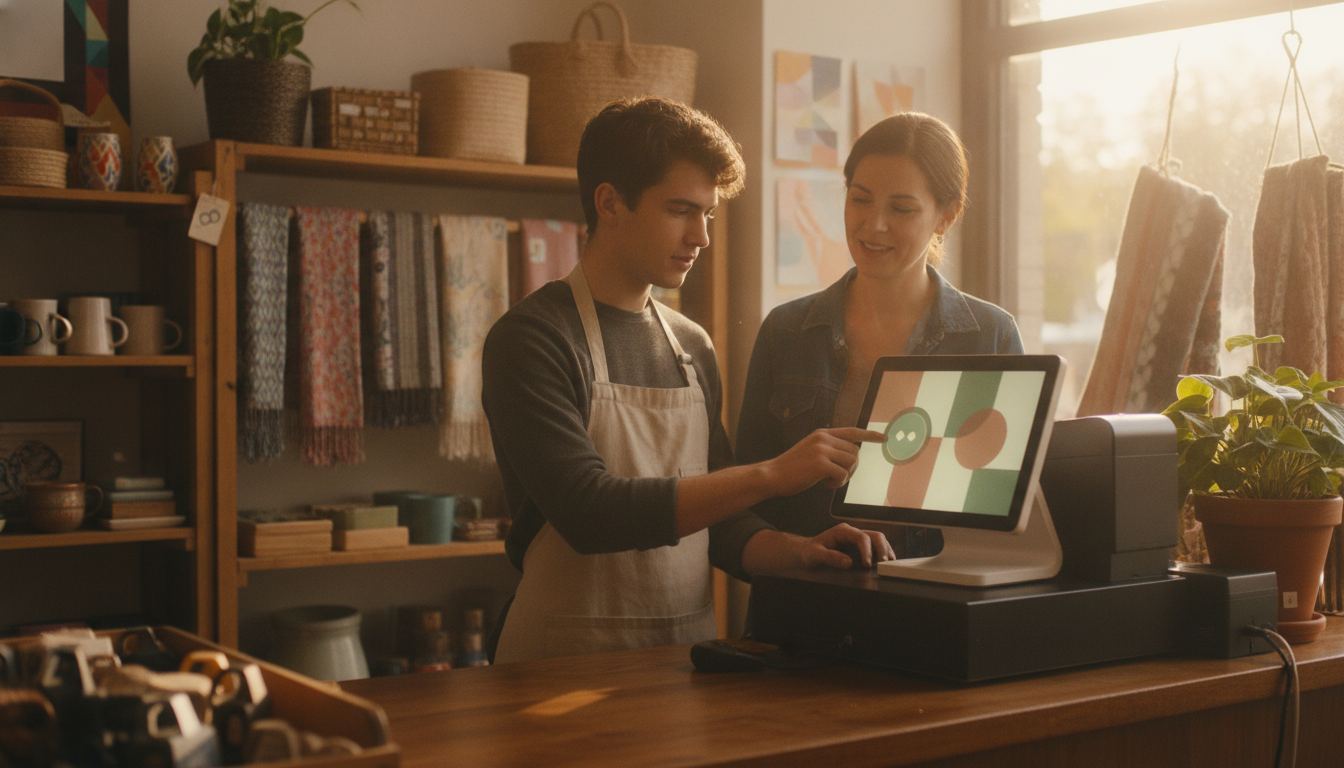
How long does it take to learn a POS system? Long enough to complete the sales your store actually rings, without a manager standing there. There is no honest number of hours that fits a one-lane bodega and a grocery with a scale. Vendors who quote “an afternoon” are describing their demo, not your Saturday.
Types of POS are already on four types of POS systems. Switching without closing is on switching POS systems. This page is the training test.
What “learned” has to mean in a counter store
A new hire is trained when they can finish these without coaching:
- find an item by scan and by name when the barcode is gone
- void one line and one whole ticket, with the reason your policy requires
- take cash, a tap, and a keyed card, and know which one costs more
- hit an age prompt for beer or tobacco and complete or refuse it
- split a SNAP basket so ineligible items do not ride the EBT card
- if you sell by weight, complete a weighed item with tare and a readable ticket
If any of those is a workaround, the system is not easy. It is short-staffed. Grocery scale rules are on grocery POS with a scale. SNAP item flags are on what you cannot sell on SNAP. Age prompts are on age verification.
Run that list on the demo unit, with your SKUs, before you sign. A trainer who will only show a bottled soda sale has not trained you.
What makes a system feel hard
Department keys instead of UPCs. A touch layout that changes when a manager “optimizes” it overnight. Age prompts that can be dismissed. EBT on a standalone pin pad the cashier has to total by hand. A scale that is not in the customer’s view. Those are design choices. They are not a staff IQ problem.
Clover is often easy to hire onto for a packaged-goods store. That is the honest yes on is Clover a good POS. NRS, grocery specialists, and liquor specialists get hard in different places: case breaks, weighed goods, and ID scan. Easy for the demoer is not easy for the closer.
Do not pay extra for a “training package” until you have watched one new hire complete the list above. If they cannot, more slides will not fix the buttons.
Counter Club’s published in-person sample is 2.50% plus $0.10, keyed and online 2.90% plus $0.25, with a $0 monthly fee on that sample schedule. Sample pricing applies to new accounts applying directly. Pricing is subject to underwriting, MCC and the merchant agreement; rates may differ and are subject to change. See pricing. Processing rates do not train cashiers. The register layout does. If you want a second set of eyes on a demo recording, send it.
Frequently asked questions
Is there a standard training time? No. Anyone publishing a universal hour count is guessing. Use the transaction list.
Should I train on live lanes? Train on a spare or a slow hour with a manager voiding practice tickets. Do not discover EBT flags with a line behind the customer.
Does a phone POS take less time to learn? Tap to Pay is one tender. It is not a store system. See can I use my phone as a POS.
What if only one person knows the back office? That is a single point of failure, not a training win. A second person should be able to add an item, take a count, and settle.
Will a simpler POS reduce shrinkage? Only if voids, discounts, and age prompts actually require a reason. Easy can also mean unsupervised.