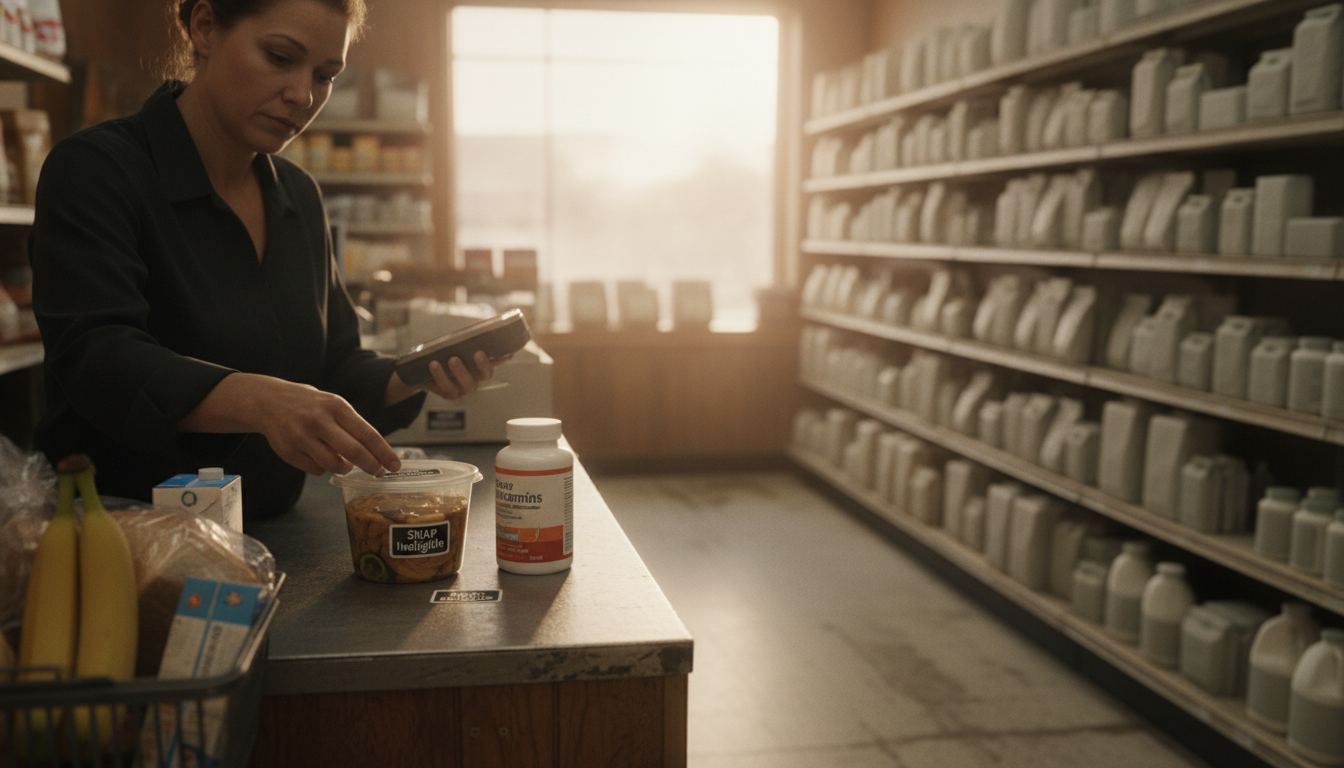
What you cannot sell on SNAP is a catalog problem, not a speech at the register. USDA publishes the eligible-foods list and a retailer notice on ineligible items. Your POS has to flag those items so an EBT tender cannot cover them. A cashier arguing with a customer is what happens after the flag was wrong.
How to get a SNAP Permit is on EBT and SNAP. Square’s EBT caveats are on Square EBT processing. This page is the federal item list and the PLU duty. Some states add soda or candy restrictions on top of that list. That layer is SNAP junk food ban.
Sources retrieved 2026-09-10: What Can SNAP Buy? (page updated June 4, 2025) and SNAP Retailer Notice, Allowable Items (notice dated October 2021, page updated November 24, 2025). Those USDA pages now also carry a June 1, 2026 notice that FNS was renamed the Food and Nutrition Administration. USDA can revise the lists. Do not treat a blog title as a new statute. Do not use USDA’s published emails as a Counter Club inbox.
What USDA says households can buy
The eligible-foods page lists food for the household: fruits and vegetables; meat, poultry, and fish; dairy; breads and cereals; snack foods and non-alcoholic beverages; and seeds and plants that produce food for the household to eat.
That is not “anything edible.” Foods that are hot at the point of sale are out. Program the hot bar, the rotisserie, and the made-to-order sandwich as ineligible even when the same chicken is eligible cold in a package.
What USDA tells retailers not to accept
The retailer notice says SNAP EBT may only buy SNAP-eligible foods or drinks. It draws a hard line on Supplement Facts versus Nutrition Facts. An item with a Supplement Facts label is a supplement and is not eligible. Vitamins, many energy drinks, shots, shakes, and protein powders sit in that bucket. Food and drink with a Nutrition Facts label can be eligible if they are otherwise food.
The same notice, and the eligible-foods page, keep these out:
- beer, wine, liquor
- cigarettes, cigars, other tobacco
- food and drinks containing controlled substances such as cannabis and CBD, on the eligible-foods page
- vitamins, medicines, supplements
- live animals, with shellfish and fish-out-of-water exceptions listed on the eligible-foods page
- foods hot at the point of sale
- nonfood: pet food, cleaning and paper goods, hygiene and cosmetics
- the retailer notice also names gasoline, diapers and wipes, utensils, coffee filters, feminine products, soap and detergent, and mobile phone cards
USDA tells you not to accept those even if the customer says it is an emergency. The retailer notice says a store that sells ineligible items on SNAP may be disqualified and fined, and may also be disqualified from WIC.
If you scan through an integrated register, USDA says it is your responsibility to make sure the system is programmed correctly. Share the ineligible list with whoever maintains product codes. Train everyone who works the counter. Those sentences are USDA’s, not ours.
How to test the flags this week
Ring a basket that mixes milk, a Supplement Facts energy shot, a hot soup, a pack of cigarettes, and toilet paper. The EBT tender should cover only the eligible food. Split the rest to cash or card in one transaction. If the cashier has to decide, the item file is not done.
A SNAP customer still cannot be charged more than the cash customer on eligible items. Dual-price and surcharge programs have to respect that. See cash discount and dual pricing.
Counter Club’s published in-person sample is 2.50% plus $0.10, keyed and online 2.90% plus $0.25, with a $0 monthly fee on that sample schedule. Sample pricing applies to new accounts applying directly. Pricing is subject to underwriting, MCC and the merchant agreement; rates may differ and are subject to change. See pricing. Card rates do not decide SNAP eligibility. USDA does.
Frequently asked questions
Did SNAP rules change for 2026? The eligible-foods page we retrieved on 2026-09-10 is current USDA guidance, with a cannabis and CBD line on that page. It is not a “SNAP 2026 act” we can cite by bill number. Recheck USDA when you reset the item file.
Are energy drinks eligible? If they have a Supplement Facts label, the retailer notice says no. If they have a Nutrition Facts label and are otherwise a non-alcoholic beverage, they can be. Read the label, do not guess from the cooler door.
Is CBD soda different from beer? USDA lists drinks containing cannabis or CBD as not eligible on the eligible-foods page. Alcohol is also out. Flag both.
Who gets fined, the cashier or the store? USDA addresses the owner. You are responsible for training and for the programmed codes.
Does this replace WIC rules? No. WIC is a separate program with its own approved-item list. SNAP flags are not WIC.