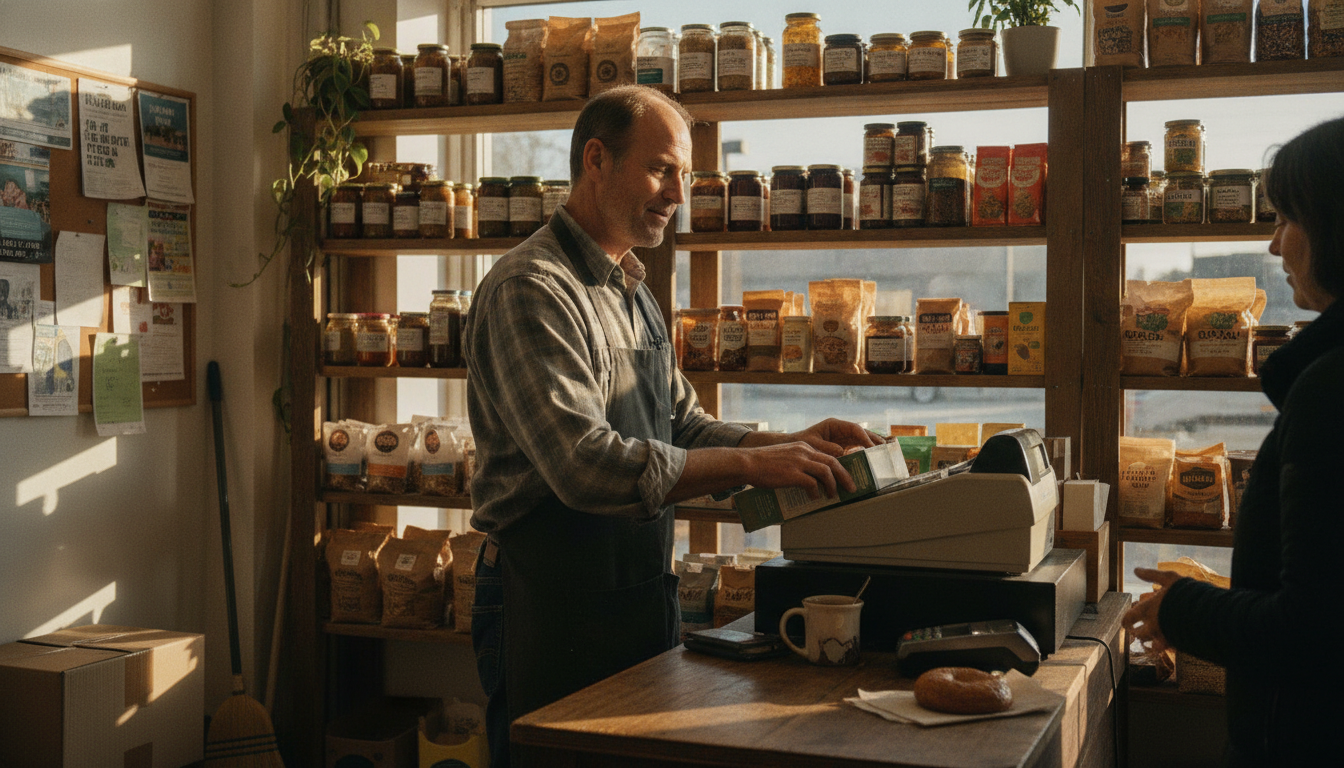
Is Clover a good POS system? For most small retail, yes. It is well built, widely supported, and easy to hire staff onto. It gets hard in one specific place: stores that buy stock in one unit and sell it in another, at high SKU counts, with pricing rules to match.
clover.com/shop currently ranks for “is clover a good pos system” as a product page, and Reddit threads sit beside it. clover.com/pricing is a JavaScript app; we retrieved no public Clover software dollar from it on 2026-09-11. Forbes Advisor’s August 7, 2026 POS cost guide lists Clover at $16 per month on a 36-month commitment. Helcim’s POS pricing page the same week cites a Clover Station Duo at $1,899 or $175 per month as Helcim’s comparison figure, not a Clover invoice.
Say yes if this is your store
You sell most things in the unit you bought them in. Your catalog runs to hundreds of items rather than thousands. Your pricing is mostly one price per item with the occasional promotion. You value a terminal that looks right in front of a customer and staff who can be trained on it in an afternoon.
That store is well served, and pretending otherwise would be a sales tactic rather than an opinion. Plenty of shops in that shape have run the same setup for years without a complaint, and the app marketplace tends to cover the odd requirement that comes up.
Say no if this is your store
You receive cases and sell singles. You carry thousands of SKUs and want them arriving with a UPC, size and pack configuration already attached. You run mix and match, case discounts, and rules that have to hold on the busiest night of the year without anybody remembering them.
In that store the gaps get filled with add-on apps, and the apps stack. Each one solves part of the problem, each one carries a monthly cost, and the sum is a different number from the one you were quoted. That is the honest complaint, and it is a fit problem rather than a quality problem. We laid out exactly where the line falls in where Clover works for a bottle shop and where it stops.
Is Clover a good POS system? It depends on one variable
The variable is unit conversion, and it decides more than price, hardware or support combined.
If a case and a bottle are one product with a working conversion, your counts stay honest by themselves. If they are two unrelated items held together by somebody’s memory, your inventory drifts within a month, and once it is wrong it stays wrong. Every downstream thing you wanted from a POS, reorder points, margin by category, shrink, depends on that count being real.
So test it rather than asking about it. Receive a case on a demo unit, break it, sell two singles and a multi-pack, then ask to see the case count and the single count reconcile on one screen. Watch what happens on a return. Ask what happens when a four-pack does not cost four times a single. If the answer involves a spreadsheet, you have your verdict, whatever the brochure says.
What is genuinely good about it
Three things, and they are not small.
The hardware is solid and looks like it belongs on a counter, which matters more than owners admit. The support network is wide, so somebody near you knows the system, and that is worth real money at six on a Friday when a terminal dies. And the marketplace means an unusual requirement often already has an answer rather than a custom build.
Those strengths are why the happy reviewers are happy. They are describing a platform that is broad, and broad is the right thing to be for most retail. The reason we sell against it in one category is depth, not quality. Our rundown of liquor store systems puts it next to the alternatives without loading the comparison.
If you already have it, should you move?
Probably not, and here is the test. Open your system and pull the on-hand count for three items you know well, then walk to the shelf and count them.
If the numbers match, your setup is doing its job and switching would cost you real hours to solve a problem you do not have. If they are meaningfully off and nobody can explain why, that is not a rounding error, that is your inventory telling you it has given up. Then it is worth looking, and it can be done without closing for a day.
Between those two answers sits the middle case: it works, but everything takes a workaround and the monthly bill has crept. That is worth a quote comparison rather than a rebuild. Our convenience store POS page covers what a modern counter should do without add-ons, and if you want a straight read on your current setup, describe your setup and we will give you a straight read.
Frequently asked questions
Is it good value? That depends on the total, not the base plan. Add the software line, every add-on you actually need, the hardware and the processing, then compare that number against one competing written quote over three years.
Is it better than the alternatives for a c-store? For a wide but shallow catalog it competes well. Once lottery, scan data and age verification all need to work together, ask for each integration demonstrated live rather than listed.
Do I lose my data if I leave? You should be able to export your item catalog and sales history, and you should do that before giving notice rather than after. Ask how the export works while you are still deciding.
Is the hardware worth buying outright? Sometimes, but ask first whether the device is locked to one processor. That single answer decides how much freedom the purchase actually buys you.
What is the fastest way to judge it for my store? Twenty minutes on a live demo running your own workflow: receive, break a case, ring an age restricted sale, apply a discount rule, and close out.