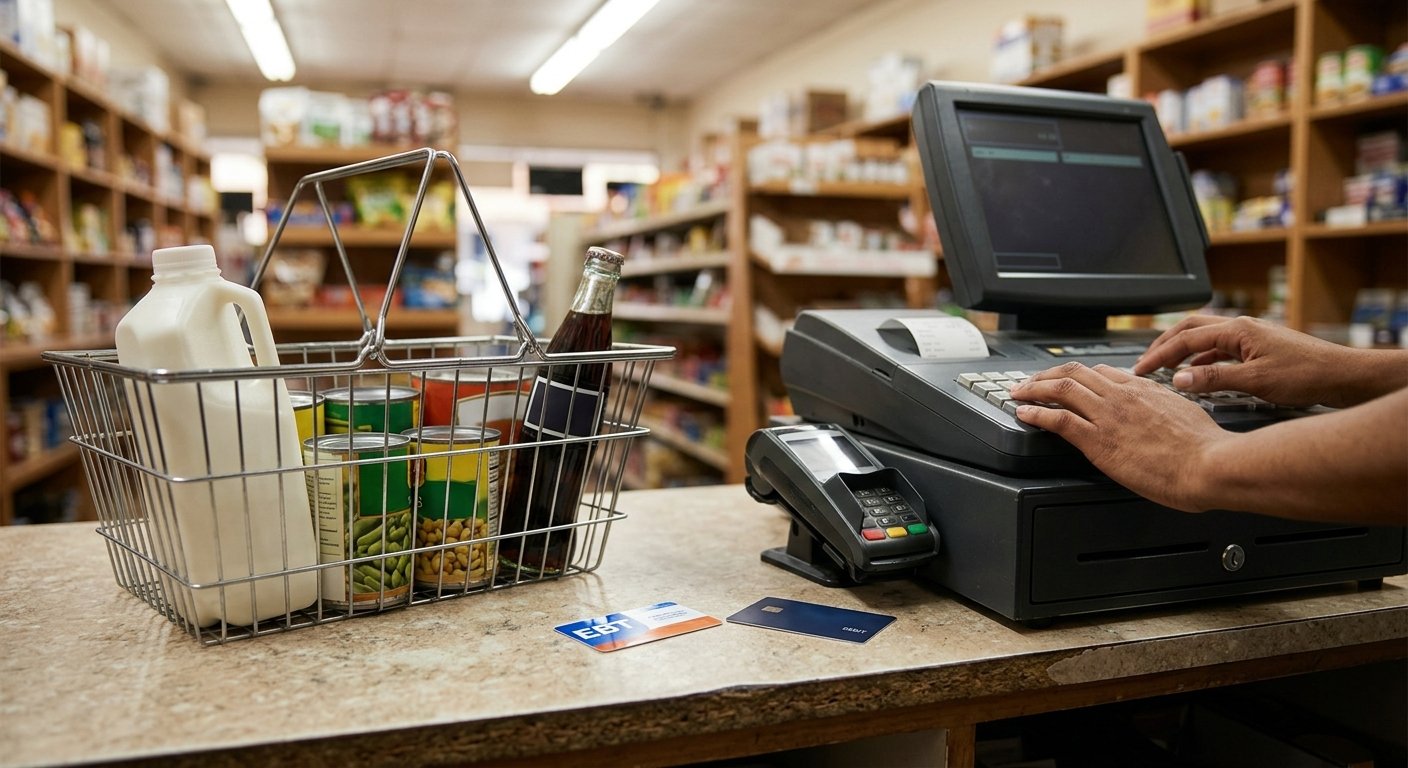
A gallon of milk, a can of beans, and a pack of paper towels hit the belt. The customer hands over an EBT card. An EBT POS system is the register that already knows which of those lines SNAP can pay, then takes a second tender for the rest. If your setup can’t split that ticket at the counter, you don’t have an EBT point of sale. You have a card reader hoping the cashier does the math.
What an EBT POS system actually is
An EBT POS system is a SNAP-ready register. It isn’t a second box beside the card terminal. SNAP authorization is a USDA program. The store has to be an FNS-authorized retailer first. Until that permit is in place, the PIN pad won’t help. The register then has to treat SNAP as a real tender. Item eligibility has to live in the item file.
That’s the whole job. The customer swipes or dips the EBT card and enters a PIN. That part feels like debit. The SNAP POS system sends only the eligible amount against the food balance. Everything else stays on the ticket. Cash, debit, or credit covers the rest.
A grocery register that only takes Visa and Mastercard isn’t enough. Plenty of retail systems can swipe plastic and still fail SNAP. They never learned which SKU is milk and which SKU is paper. We board merchant accounts and set those flags in the item file. We do that for liquor, convenience, grocery, gas, and bodega counters. We don’t authorize the store. USDA does. Underwriting, the merchant category code, and the merchant agreement still decide the card side of the account. SNAP permission is a separate USDA decision.
Read the current retailer rules on the USDA SNAP retailer page. That’s where authorization starts. Once the store is authorized, EBT and SNAP processing has to live in the same checkout as cash and cards. Two devices and a pad of paper is how tickets get miskeyed.
An EBT register for grocery also has to print a clean split. The receipt should show the SNAP portion apart from the rest of the sale. The cashier should read that split without guessing. The back office should pull SNAP out of the day’s totals, the same way it pulls cash and debit. If SNAP sales vanish into a junk tender, you can’t reconcile the drawer.
Item flags, not a second terminal, decide the ticket
The item file is what makes SNAP work, not a dedicated EBT-only brick. Each sellable unit needs a SNAP flag, eligible or not. We set those flags in the file when we configure the store. USDA keeps the live eligibility rules. The cashier still looks at the belt.
That last part matters. A flag on a PLU can be wrong. A new SKU can land in the file with no flag at all. A case of twelve soup cans can be flagged while the single can you sell off the shelf is not. We track case breaks and units in inventory so the each and the case don’t fight each other. The flag still has to be right on both.
Don’t expect the PIN pad to know. The pad only sees a dollar amount. The register decides that amount by walking the ticket line by line. If an ineligible item is on the ticket and the flag is missing, SNAP may try to pay for it. Or the cashier voids the whole sale and starts over. Either way the line stops.
A second, SNAP-only terminal is the old workaround. The cashier rings the food on one device and the rest on another, then hopes the two receipts add up. That’s how overcharges and undercharges sneak in. A real SNAP POS system keeps one ticket, one scan, and one PIN pad. Cards, SNAP, and cash settle against that same ticket.
We set SNAP flags during setup for the stores we configure. The demo is where we walk a mixed basket, not a brochure screenshot. If a line doesn’t flag the way you expect, we fix the item before the store takes a live card. USDA still owns the eligibility rules. Your item file is how the register obeys them. For the kinds of goods that routinely fail at the PIN pad, read what you cannot sell on SNAP, then check the current USDA list. Don’t run last year’s aisle from memory.
Split tender when SNAP cannot cover the basket
Split tender is the moment the paper towels stay on the ticket. SNAP pays the milk and the beans. Debit, credit, or cash pays the rest. The customer shouldn’t have to unload the belt, run two sales, or watch you void a half-rung order.
The register has to compute two piles from one scan. Eligible subtotal. Ineligible subtotal. Then it has to let the SNAP balance come up short on the eligible pile without killing the sale. Benefits don’t always cover the whole food side. When they don’t, the remainder of the food and all of the non-food still need a second tender. That’s split tender on EBT in practice, and it’s the test most grocery software fails.
Some EBT cards also carry a cash-benefit balance next to the SNAP food balance. Those are different pots of money. SNAP food pays the flagged food lines. A cash-benefit balance, where the card has one, can cover more of the ticket. The register has to ask the right balance. Prompting SNAP when the customer meant cash benefits, or the reverse, is how you get a declined PIN and a confused line.
Don’t key the SNAP total by hand if the register already knows the eligible subtotal. Hand-keyed SNAP amounts are how a cashier rings forty dollars of food against a smaller ticket, or leaves a non-food line inside the SNAP pile. The PIN pad should receive the eligible amount from the item flags. The cashier confirms. The customer enters the PIN.
After SNAP posts, the remaining balance due should be obvious on the cashier screen and the customer display. Then the second tender runs like any other sale: cash in the drawer, or a debit or credit card on the same pad. For the grocery counters we set up, that second tender is part of the same grocery store POS ticket, not a side transaction. If you can’t finish a mixed basket in one sale, the system isn’t ready.
What to test before you take the first EBT card
Test a mixed basket on the live item file before the first real SNAP customer. Authorization from USDA doesn’t prove the register will split the ticket. It proves the store may accept the benefit. The file, the PIN pad, and the cashier flow still have to work.
Build three tickets and run them in training mode, or on a test card your processor provides.
- A basket of only SNAP-eligible food, paid with SNAP, should settle in one tender with no remainder.
- A mixed basket of food plus lines you flagged ineligible should take SNAP for the food and a second tender for the rest.
- A SNAP shortfall on eligible food should leave a remainder due, then take cash or a card for that remainder plus any ineligible lines.
Watch the receipt. The SNAP amount, the second tender, and the items should match what you scanned. If the receipt shows one lump, the reporting will too. Then walk the same three tickets after a case break: sell the each from a case of twelve, not the case itself. Flags that work on the case and fail on the unit are a common miss.
Have the cashier check the basket by eye on every test. The register is a filter, not a substitute for looking. A misflagged SKU or a new item with no flag will pass the PIN pad and still be the store’s problem.
Confirm the tender reports before you open. SNAP should appear as its own tender in the closeout, next to cash and cards. Deposits for the merchant accounts we board land the next business day, and batching at the end of the day is what starts that clock. A late batch pushes the deposit, not the sale. If SNAP is mixed into debit, you’ll spend the morning hunting one number.
Don’t skip the PIN pad itself. The pad has to accept an EBT card, collect the PIN, and return an approve or decline without dropping the ticket. SNAP is an online benefit. If the line is down, the cashier needs a written fallback from your processor, not a guess.
How this sits next to WIC and a state lottery box
WIC isn’t SNAP with a different logo. WIC pays specific approved foods, often by brand, size, and quantity, and it uses its own tender and its own item rules. A SNAP flag on milk doesn’t mean that same SKU will pass WIC. If you take both, the item file needs both sets of flags, and the PIN pad has to run both tenders without mixing the balances. We scope that on the demo. We don’t treat WIC as a SNAP add-on.
Lottery sits outside the register on purpose. The state runs its own lottery terminal. The work at your counter is reconciliation, not integration. A pack of scratch-offs will never post as a SNAP line. Don’t ring lottery into the grocery ticket and hope a tender type sorts it out. Cash in, cash out, and a tape from the lottery box at close. That’s the job.
Age-restricted items belong on the same ticket as SNAP more often than people expect. Beer in the same basket as milk is a normal convenience-store sale. The age check still has to fire on that line. The SNAP split still has to leave the beer on the remainder. One ticket, two programs, one cashier. If the age prompt kills the whole sale, you’ll re-ring the milk for no reason.
Tobacco scan data is the same family of problem: the register has to know the item. Those programs need sales detail in the format the program asks for. Payment amounts and eligibility stay with the manufacturer program. SNAP eligibility stays with USDA. Don’t reuse a SNAP flag as a tobacco flag. They answer different questions.
Gas is its own split. SNAP doesn’t belong on the pump. Inside the c-store, the same item-flag and split-tender rules apply to the grocery and snack racks. Fuel stays on the fuel tender. Food stays on the food ticket.
The through-line is one register that already knows the item. SNAP, WIC, age, scan data, and lottery each fail in a different way when the file is dumb. We configure the file for the store in front of us. USDA, the state lottery, and the manufacturer programs still write their own rules. Your job at checkout is to obey them on one ticket, with the cashier’s eyes still on the belt.
Frequently asked questions
What POS systems accept EBT? Not every grocery register can. The store needs USDA FNS authorization, and the POS has to flag SNAP items, take EBT as a tender, and split the rest of the ticket. A card terminal that only does Visa and Mastercard will swipe an EBT card and still fail the sale. Ask for a mixed-basket demo on your item file, not a yes on a spec sheet.
How do store owners get paid from EBT? SNAP deducts the eligible amount from the household’s benefit balance and pays it to the retailer through the processor on the merchant account. For accounts we board, deposits land in the merchant’s bank the next business day, and batching at the end of the day starts that clock. A late batch pushes the deposit. SNAP should show as its own tender in the closeout so you can match that deposit.
Do you need a separate EBT machine? No. An EBT POS system is the same register and PIN pad, with SNAP flags in the item file and EBT as a tender. A dedicated EBT-only box is a workaround, not a better checkout. The question to ask on a demo is whether a mixed basket splits in one sale.