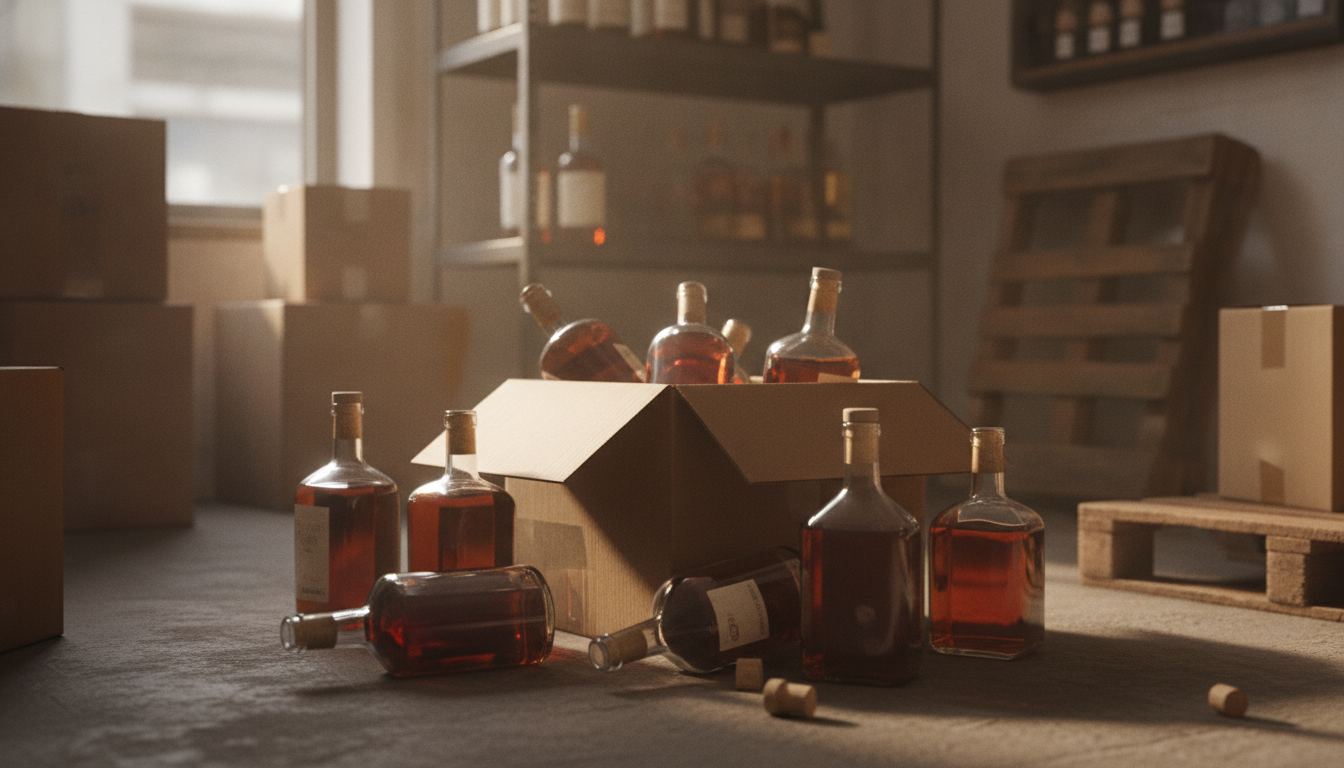
A case of twelve hits receiving as one unit. A cashier sells two bottles. Case break inventory is what happens next: on-hand still shows one case, or it flips to minus ten, because the register never learned that the case became singles. We set pack size in the item file when we board the store, so the break is a field, not a night of corrections.
What a case break is at the counter
A case break is the moment one receiving unit becomes the units you actually sell. Soda arrives as twelve cans. Cigarettes arrive as a carton of packs. Liquor arrives as a case of bottles. The customer buys a can, a pack, or a bottle. If the item file only knows the case, every single that walks out leaves the count wrong.
Lightspeed Retail’s box-item docs (retrieved 2026-09-16 from retail-support.lightspeedhq.com/hc/en-us/articles/229130088-Creating-boxes) describe the same job: you buy by the case and sell packs or singles, and shared inventory is supposed to break down or build back up at checkout. That is the mechanism. A counting crew cannot invent it after the fact.
This is not the same article as convenience store inventory management, which is the whole receiving and unit mix. Case break inventory is the one field that makes on-hand go negative when you open a case.
Why on-hand goes negative after you open a case
You received one case. On-hand is 1. You put twelve bottles on the shelf. You sell two. If the register still thinks the unit is the case, it either leaves on-hand at 1 (the shelf is a lie) or it tries to subtract two from one and you get a negative. Staff then type an adjust. The adjust is where missing product hides.
The other failure is the opposite. Someone breaks the case in the back and receives twelve singles by hand, without decrementing the case. Now you have thirteen units in the file and twelve on the shelf. The next order looks like you are out. Another case arrives. The back room eats it.
Fix the pack size, not the personality of the closer.
What the register has to do when twelve become singles
The item needs a pack size, or a parent and child, that the register uses at sale. Receive 1 case. On-hand for sellable singles becomes 12, or the case remains 1 with a break command that explodes it. Sell 1 bottle. On-hand drops by 1 bottle, not by 1 case.
Lightspeed X-Series packaging docs (retrieved 2026-09-16 from x-series-support.lightspeedhq.com) warn that a case of 24 can be related to packs of six or to singles, and that each variant can only be divided once in that model. Read your own vendor’s rule. The demo test is the same either way: sell one single from a received case and watch both units.
Barcode matters. The case UPC and the bottle UPC are different, or they are the same family with a unit of measure. If the cashier can scan the case code on a single, you will sell a case price for a bottle, or a bottle decrement for a case. Put the codes on the item the way they sit on the packaging.
Retail inventory management on this setup is receiving, selling, and credits in one file. A spreadsheet that you fix at close is a second store in your head.
How liquor bottles and c-store packs break differently
Liquor is bottles from a case, sometimes with a mix-and-match or a bottle deposit on the single. The case may never sell as a case. If you still receive it as a case, the break has to happen at receiving or the first bottle sale. Liquor store POS that cannot do that will fight the night count. The cousin of this walk is liquor store inventory software, which is the count itself.
C-store packs are messier. A soda family can be a case of 24, a 12-pack, a 6-pack, and a can. Cigarettes are carton and pack. If the system only stores one sellable unit, the other units become manual items with no stock. Those ghost items are how a pack sale never hits the carton.
Do not assume the same break math works for both. In the demo, use one liquor case and one soda case. If the vendor only shows a T-shirt variant, you have not tested the store.
What to force in a demo before you buy
Bring your own worst item. A 12-bottle spirit and a 24-can soda are enough.
Receive the case. Sell one single. Ask what on-hand is for the case and for the single, on screen, before anyone types an adjust. Then sell a pack if you sell packs. Then reverse it: build the case back from singles if the system claims it can.
Ask who can run the break. If only the back office can explode a case, the closer will skip it. If any cashier can, you need a log of who did it.
Ask what a credit memo does. A vendor who takes back a case you already broke into singles will leave a hole unless the credit knows the unit.
We set that pack size in the item file as part of boarding, with the register and the scanner. If your counts are already accurate and the break already works, switching buys you time you do not need. If on-hand goes negative every time you open a case, the file is the defect.
Frequently asked questions
Is a negative on-hand always theft? No. Unrecorded case breaks, unlogged breakage, and receiving the order instead of the delivery will do it first. Fix the recording, then look at what is left.
Can I keep the case as one SKU and ignore singles? Only if you never sell the inner unit. The moment a bottle or a can leaves the case, the SKU has to know the inner unit.
Do I need a second inventory app? Not for the break itself. The register has to know pack size. An add-on that cannot write back to the till leaves you with two counts again.