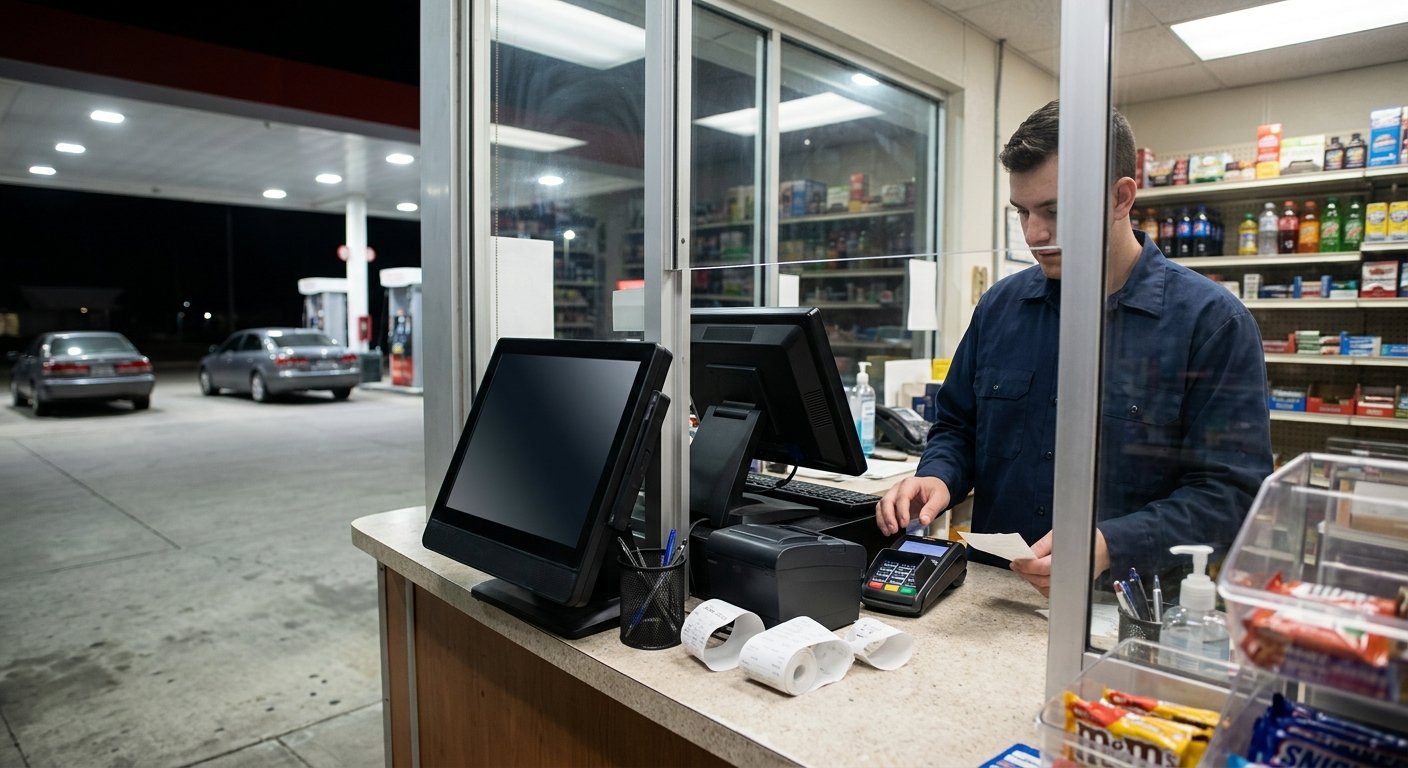
A gas station close is pump totals versus inside totals, and they will not match if you only read the register. Fuel sold on the island, snacks sold at the counter, a card that held one amount and settled another, a drive-off, and a lottery terminal the state owns all sit on different clocks. Gas station POS reconciliation is the night work of lining those streams up so the morning deposit, the drawer, and the gallons you sold tell the same story.
What a gas station close has to tie out
POS reconciliation means matching what each system recorded to what actually moved. At a station that is never one tape. You have gallons by grade from the pumps. You have dollars by tender from the inside register. You have cash that left the drawer for the safe. You have cards that have not settled yet. You have lottery the POS never rang.
A liquor store close is still one counter. A c-store with pumps is two sales floors sharing a lot. The inside close looks like a convenience store POS close. The island is a second floor that never walks through the door.
When we set a station up, we put those two floors on one night-close view. Pump gallons by grade. Inside sales by department. Tender split so cash, debit, credit, and EBT do not collapse into one number. Exception rows for voids, drive-offs, and prepaid fuel that did not finish.
If you only Z out the register, you are reconciling the candy aisle. The pumps keep their own meter. A generic retail close still applies to the drawer. It does not explain why fuel dollars and inside dollars refuse to add up. We walk that generic close in our end-of-day reconciliation post. This close is the extra work the pumps add.
The third stream is physical fuel. Tank gauges and dispenser meters measure product, not tickets. A delivery during the shift, a temperature swing, or a sale that posted after you already printed the tape will make the tank and the POS disagree. That disagreement is a lead. It is not noise you shrug off.
You are tying four things, not one. Fuel volume. Fuel dollars against the tenders that paid for them. Inside merchandise against the drawer and the cards. Cash as it moved from till to safe to bank. Miss one, and the other three look wrong.
Pump sales, inside sales, and the two clocks
The pump clock starts when the nozzle authorizes. The register clock starts when the cashier rings a sale. A customer who pays at the pump never touches the drawer. A customer who prepays inside and then pumps lives on both clocks. Those two clocks are why pump versus inside sales is the first split on a gas station POS close.
Fuel needs its own department. Coffee, tobacco, beer, and hot food need theirs. Mix them into one daily total and you hide the miss. A short night on regular unleaded looks like a good night on energy drinks if the tape only prints one number.
Card mix is different on each floor. Pay-at-pump is almost all cards. Inside is cash, cards, EBT on eligible grocery, and the occasional split tender. Compare a processor batch to the whole-store total and you are comparing two different baskets. The batch is telling you what settled. The POS is telling you what rang. Those are related. They are not the same report.
Batching at the end of the day is what starts the funding clock. Deposits land the next business day. A late batch pushes the deposit, not the sale. Pump cards that finish after you already closed the inside day show up on the next batch. That is a timing gap. It is not a missing sale. Write the cutoff time down and use it on both systems.
A c-store shift close might happen three times. The pumps do not care about your cashier’s lunch. Close the register at eleven and let the fuel controller roll at midnight, and you built a one-hour hole on purpose. Pick one close time. Make the island and the counter use it.
The longer weekly view, tank deliveries, vendor bills, belongs in back office, not on the night tape. If you are choosing that layer, start with our back office software for a gas station guide. Tonight you only need the two clocks to agree on the same window.
Pre-auth at the pump versus the final ticket
When a card hits the pump, the island does not know how many gallons will come out. It asks the issuer for a hold. The customer pumps. The final ticket replaces the hold with the real gallons and the real dollars. The pending line on the customer’s phone is the hold. The settled charge is the fuel they took. Those two numbers are supposed to differ until the pump finishes.
The POS should show the settled ticket, not the hold. If your close is chasing the pending amount, you are reconciling the customer’s bank app, not your station. Wait for the pump to complete. Then match gallons and dollars on that completed row.
A drive-off is gallons out and no tender in. The pump log has a volume. The POS has an unpaid ticket or a void, if someone coded it. If nobody coded it, your gallons and your dollars diverge and the close has no story. The night person has to flag it before they print the tape. A silent drive-off becomes a mystery by morning, and mysteries do not get smaller.
Prepay inside is the mirror. The cashier takes cash or a card for a set amount. The pump stops short. The difference is a refund sitting in the drawer, or it is supposed to be. The pump recorded the dispensed amount. The POS recorded the original tender in and the refund out. Skip the refund and the drawer is over. The fuel dollars look short. Both symptoms are the same missed step.
Fleet cards and mobile wallets settle on their own calendars. Give them their own tender rows. Dump them into credit and the processor portal will never match the tape. You will spend the morning hunting a gap that was only a label.
Price changes during a shift belong on this list too. The sign on the street, the pump, and the register have to show the same posted price when the sale happens. A change that hit the island and not the inside, or the other way around, produces a clean-looking tape with the wrong dollars. Change prices once, on both floors, then close.
Lottery, safe drops, and the cash drawer
The state runs its own lottery terminal, so the work is reconciliation, not integration. Scratch packs, online wagers, and payouts never flow through your item file. You activate a pack. You sell it down. You pay a winner out of the drawer. The state settles on its own cycle. The POS cash tender will never equal the bills in the drawer if lottery cash walked through it unlogged. That is why we treat lottery as its own close, the way we lay out on our lottery reconciliation page.
Safe drops are the other silent mover. Cash builds in a c-store drawer all night. Someone walks an envelope to the safe. If that drop is not a POS function with an amount, a time, and a name, the expected drawer is a lie. Count the drawer against cash tender, minus drops, minus lottery payouts, plus lottery cash that came in. Then count the safe against the drop log. Then, when the deposit hits, count the bank against what you said you dropped. Three layers. Same cash.
Keep the starting drawer the same every shift so the math does not move. Count paper and coin. Count twice. A short and an over are both a story. An over often means a drop or a refund was never logged. A short often means the cash left and the system still thinks it is there. The pattern across shifts is the signal. One odd night is a count. The same shift short three Tuesdays in a row is a workflow.
EBT stays inside, on eligible grocery, with split tender when the basket mixes food and fuel or food and a restricted item. SNAP authorization is a USDA program. The register has to know which items qualify, and the cashier has to finish the split on one ticket. That tender row belongs on the inside close, not on the pump tape. Card data on both floors still sits under the processor PCI program.
Do not read cash expected off total sales. Total sales include credit, debit, fleet, and fuel paid at the pump. Pull the cash tender row. Then pull the drop log. Then pull lottery. That is the only path that matches a counted drawer.
What the POS has to show before you lock the door
We set the night-close view so you can leave without a spreadsheet. The screen has to answer the pumps, the counter, the drawer, and the batch in one pass. If a number is missing at lockup, it is still missing at 6 a.m., and the opening cashier inherits your gap.
Before you lock the door, the POS has to show all of this on the same close window.
- Fuel by grade in gallons and in dollars, matched to the pump meters for that same window.
- Inside sales by department, so tobacco and beer do not hide inside misc.
- Tender split with cash, debit, credit, EBT, fleet, and other each on its own row.
- Exception rows for voids, no-sales, drive-offs, unpaid fuel, and prepaid refunds.
- Cash math for starting drawer, drops, lottery in and out, and counted versus expected.
- Batch status, because an unbatched day does not start next-day funding.
Print it or save it. The old processor keeps its own records if you ever leave, and sales history does not migrate. Download the night file while you still have the login. The item library can move later. The close tape from tonight will not.
Inside inventory is a different cadence from fuel. Gallons move all day, so volume is a daily tie against the meters. The twelve bottles that come out of one case, the carton that became packs, the hot-food build, those follow the count schedule you already run. A monthly shelf count does not replace a nightly fuel tie. A nightly fuel tie does not replace a real item count. They answer different questions.
Age checks, tobacco scan data, and EBT eligibility are live at the counter during the shift. The close only needs the evidence that the register logged them. Scan data is a file in the format the manufacturer program asks for. Whether a given POS version and item file can send it is a setup question, not a 11 p.m. question.
If the night-close view cannot split pumps from the counter, you are not closing a gas station. You are closing a retail drawer and hoping the island agrees. Hope is not a tender.
Frequently asked questions
What is POS reconciliation at a gas station?
It is matching pump totals, inside totals, cash, and the processor batch for the same window. The register tape is only the inside half. Gallons, drive-offs, pre-auth tickets that later settled, and lottery cash have to sit next to that tape or the morning numbers will not hold.
Can you skip the night close if the drawer looks close enough?
You can skip it, and then you cannot tell a drive-off from a late batch from a missed safe drop. The drawer is one layer. Fuel meters and card settlement are the other two. A close-enough till still leaves the island unexplained.
Do pump sales and inside sales ever match on one tape?
They should not, because they are two floors. Pay-at-pump cards never hit the drawer. Inside cash never hits the nozzle. The close is a split by design. You want both sides complete, on the same clock, not one blended total that hides which side moved.