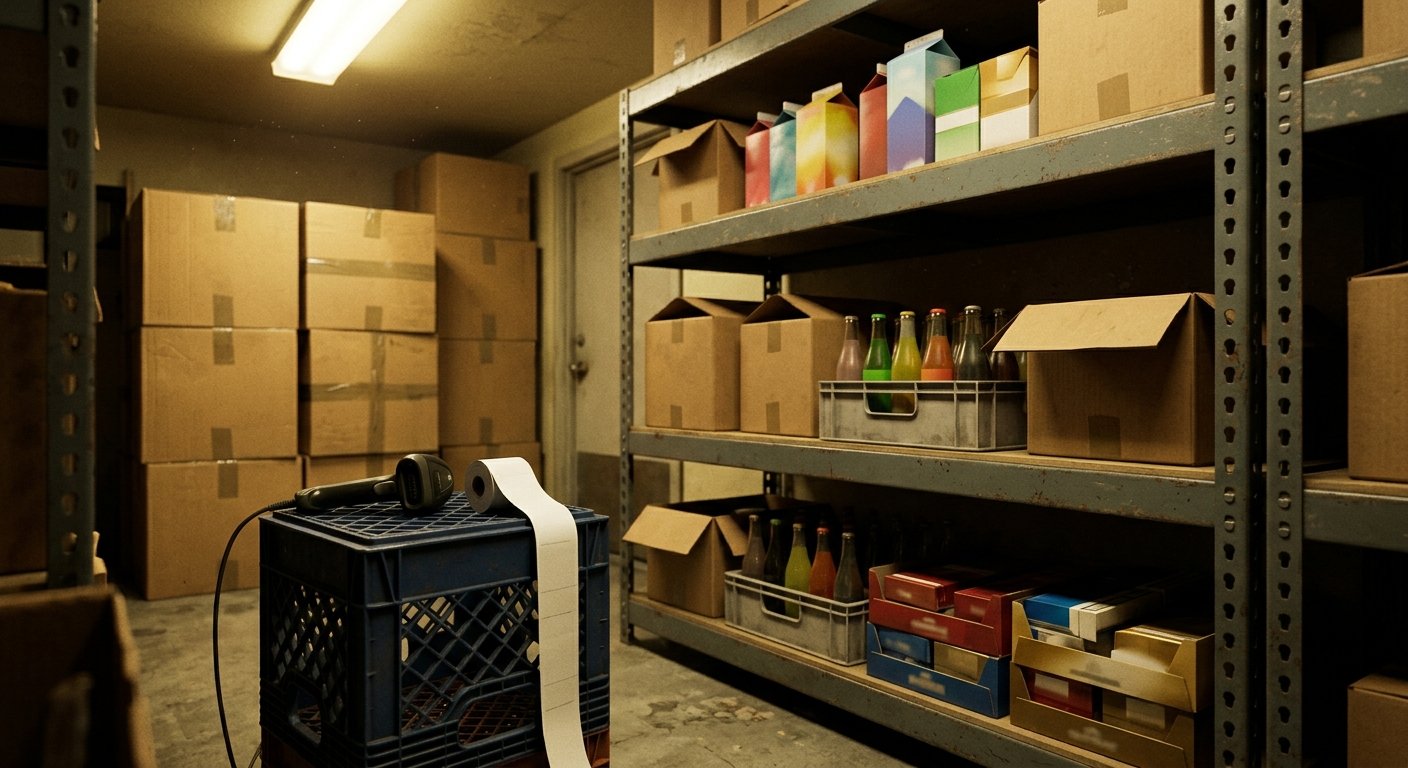
A clipboard in the back room is not convenience store inventory management. The work is one item that sells as a case, a pack, and a single, with every scan at the register changing on-hand in the same file. If those units don’t talk to each other, the night count is theater. We set that item file when we board the store.
What convenience store inventory management has to track
Convenience store inventory management has to follow the unit the customer buys, not the unit the truck drops. A soda case comes in as twelve cans. A cigarette carton comes in as packs. A sandwich has a date. Lottery sits on a state terminal that will never talk to your register. Those are different jobs. They don’t share one spreadsheet row.
Most of the store arrives with a driver, not from your own warehouse. The soda route, the snack route, the bread route, and the cigarette wholesaler each leave their own invoice. Grocery and some candy come from a warehouse or a cash-and-carry run. C-store inventory management starts at receiving. If the case never hits on-hand when the driver leaves, every later count is a guess.
The register has to know more than a name and a price. Age-restricted items need a check at scan. SNAP-eligible grocery has to split from ineligible items on the same ticket, because SNAP authorization is a USDA program and eligibility lives on the item, not in the cashier’s head. Tobacco scan data programs need sales detail in the format the program asks for. Lottery is reconciliation against the state’s terminal, not a grocery SKU you decrement.
Floor and back room both count. Extra cases sit on a steel rack behind the cooler, or they sit on the selling floor. If the system only knows “in the building,” you’ll order another case of energy drinks while six cases hide behind the mop bucket. A handful of SKUs turn every shift. The rest wait. Convenience store inventory control is watching the fast movers by unit, and putting the slow ones on a longer count cycle.
Cases, packs, and singles on the same item
The same item has to live as more than one sellable unit. You receive a case. You break it. You sell a twelve-pack. You sell a can. If the item file only knows the case, every can that walks out leaves on-hand sitting at one case until someone types a correction.
We set that as case breaks and unit tracking in the item file. That’s part of what the account includes, along with the register, the scanner, and reporting per location. A convenience store POS that can’t break a case into the units you actually sell is a cash drawer with a barcode gun.
Walk one soda. The driver drops a case of twelve cans. Receiving should add twelve sellable singles, or one case the system knows how to explode. A customer buys a can. On-hand drops by one, not by a case. Another customer buys a two-liter. That’s a different barcode, or a different unit on the same family. Mix those up and you’ll reorder the wrong size.
Cigarettes are the same math with worse consequences. A carton on the shelf is packs. A pack at the counter is the unit people actually buy. Sell a pack from a carton the system still thinks is whole, and the count is already wrong. Staff then “fix” it with a manual adjust. The adjust is where missing product hides.
Liquor does this too, by the bottle and the case. If you also run wine and beer, the liquor store inventory software problem is the cousin of this one: one receiving unit, several selling units, one on-hand number that has to survive both. Retail inventory management on this setup isn’t a second app you open after close. Sales decrement stock. Receiving increments it. A credit memo decrements it again. If those three don’t share a file, you’re running two stores in your head.
Deliveries, credits, and the night count
A delivery that isn’t received is an instant hole. The driver is gone. The invoice is in a drawer. The cooler looks full. The system still thinks you’re out. Then someone orders again, and the back room eats the extra cases.
Receive against the invoice in front of the driver when you can. Short a case, note it before you sign. Damaged product needs a credit that hits on-hand, not a sticky note on the office monitor. A vendor credit that never posts is how a clean store looks like it’s leaking.
The night count is a check on the file, not a replacement for it. Count the fast movers and the theft set: cigarettes, energy drinks, small liquor if you carry it, and the hanging cards by the register. Cycle those. Don’t shut the store to count every SKU because the file is untrusted. That’s the sign the units are wrong, not that you need a longer night.
Perishables rotate oldest stock to the front, or they become a write-off you’ll blame on missing product. Sandwiches and milk don’t care about your case-break logic. They care about the date. Put the new milk behind the old milk. The system can warn you only if the receiving date made it into the file.
Lottery stays off this count. The state runs its own terminal. You reconcile the book, the activations, and the cash. You don’t decrement a ticket from grocery inventory. Mix those drawers and you’ll chase a variance that isn’t inventory. Close the register, then count. Don’t count while a shift is still selling, or the file and the shelf will disagree by the last few packs.
What to make a vendor do in a live demo
A brochure that says the stock updates as you sell tells you nothing. Make them run your items.
Have them build one soda that sells as a case and as a can, then scan both. Watch on-hand. If the can sale drops a whole case, stop. Have them receive a case against an invoice, then post a credit for two damaged cans, then show on-hand. If the credit is a note and not a quantity, stop.
Then run a ticket a real store rings. An age-restricted item. A SNAP grocery item next to a bag of ice. Split tender, EBT then cash or card. Scan a pack of cigarettes. Ask whether the item file can export the sales detail a tobacco scan data program wants. That last one gets checked during setup on our side, because the POS version and the item file either can produce the file or they can’t.
Don’t ask them to name three winners. Watch the units. Watch the credit. Watch whether a second location can see the same item file without someone emailing a spreadsheet. Reporting per location is what you need if you ever add a second counter. Sales history doesn’t migrate off an old processor when you leave, so download statements before you close that account. The item library and pricing can move. Historical tickets stay with the old processor.
We set this up remotely. Phone, video, and hardware shipped already configured. The demo has to prove the item file, not a map.
When a counting service is a patch, not a system
A hired crew can count what is on the shelf tonight. That’s useful when you’re buying a store, changing systems, or you no longer trust the file. It isn’t a convenience store inventory management system by itself.
If the item file still treats a carton as one unit and a pack as a mystery, the crew’s number is stale by the morning rush. You paid for a photograph of a moving target. Convenience store inventory counting services belong after the units are right, or as the baseline when you first load the file. They don’t replace case breaks.
Use a count to load on-hand once. Then let sales, receiving, and credits keep it. Count the theft set on a cycle. Bring a crew back when the file and the shelf have drifted, and treat that drift as a bug in receiving or in the unit conversion, not as a reason to count forever.
A clipboard and a service invoice feel like control. The register is the control. If the scan doesn’t move the same unit you receive, hire the crew only to tell you how far off you already are.
Frequently asked questions
Where do convenience stores get their inventory? Most of it walks in with a Direct Store Delivery driver. Soda, snacks, bread, and cigarettes arrive on those routes with their own invoices. Grocery, some candy, and house supplies often come from a wholesaler or a cash-and-carry run. Lottery product lives on the state’s terminal, so receiving has to match each channel.
What should a convenience store inventory management system prove in a demo? One item that sells as a case and as a single, a receive, and a credit that changes on-hand. If those three work, the night count has something honest to check. If they don’t, you’re buying a reporting screen.
Is a counting service enough for c-store inventory management? No. A crew can baseline the shelf. The register has to keep the units after that. Hire the count when you load a new file or when you no longer trust on-hand, then fix the case break that caused the drift.