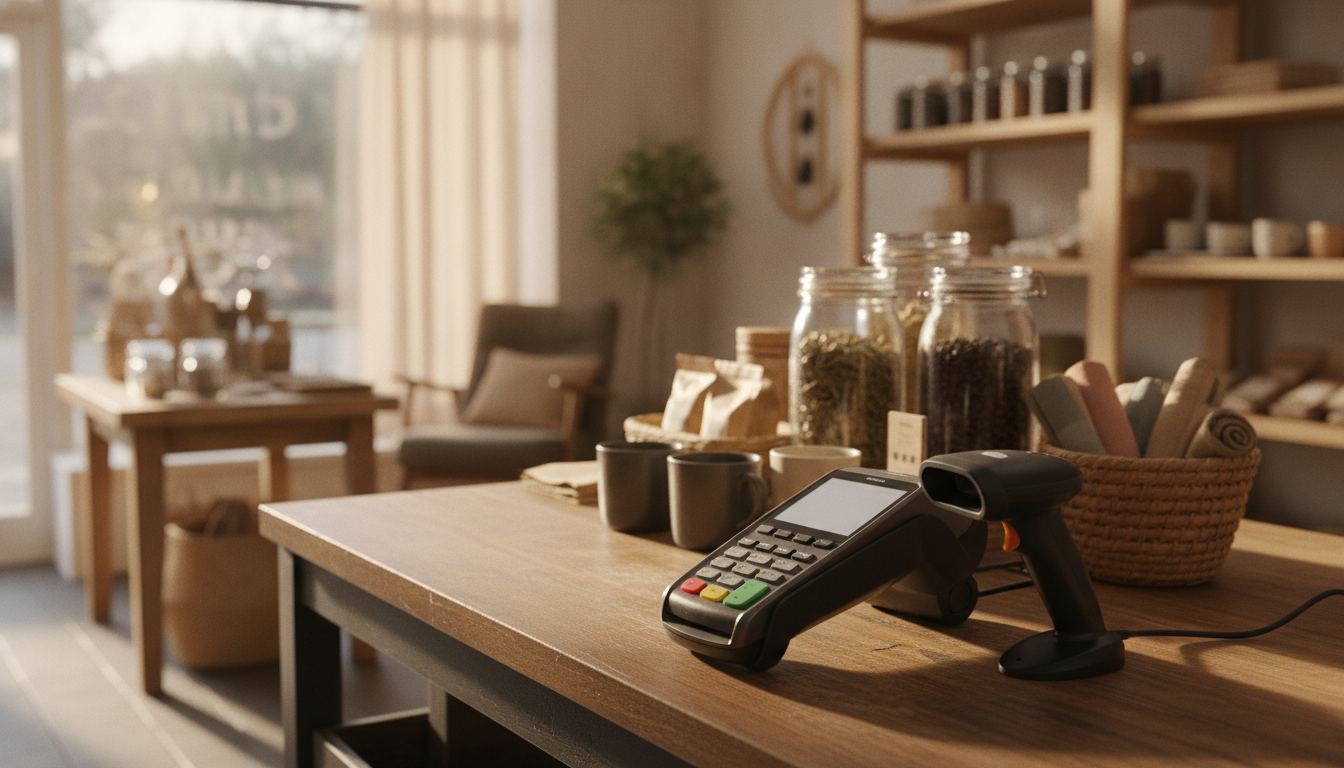
A free Clover POS system is a real offer and it is not a trick, but somebody paid for that terminal and the only open question is which line of your bill carries it. Usually the processing rate. Occasionally a term commitment. Sometimes both, which is the version worth reading twice.
freecloverposprogram.com currently ranks for “free clover pos system.” That is a lead-gen page, not Clover’s hardware shop. clover.com/pricing retrieved 2026-09-11 is a JavaScript app with no public dollar we could copy. Forbes Advisor dated August 7, 2026 lists Clover at $16 per month on a 36-month commitment. Read the processing rate and the term on the actual agreement, not the “free terminal” headline.
Where the cost went
Hardware costs money to make and to ship, so a provider giving it away is recovering it somewhere. In practice that means a slightly higher processing rate, a monthly software line, a multi year term, or a clause requiring the equipment back if you leave.
None of those are dishonest by themselves. They are financing, and financing is a normal thing for a small business to accept. What turns it into a problem is not knowing which of the four you agreed to, because each one behaves differently as your store changes.
The store that gets hurt is not the store that took free hardware. It is the store that took free hardware, then tripled its card volume, and kept paying the rate that was built to buy a terminal three years ago.
When a free Clover POS system is genuinely the right deal
Concede the honest case, because it exists. If you are opening, or your card volume is modest, or cash flow is the binding constraint this quarter, then paying nothing up front and a little more per transaction is straightforwardly sensible. You keep your money now and you pay for the box slowly out of sales that have not happened yet.
It is also the right deal when you are not sure the setup will suit you. Free or rented hardware you can hand back is worth more than owned hardware you regret, and that optionality has real value in the first year.
Where it stops being the right deal is at volume. A rate that carries the cost of a terminal is cheap on a small month and expensive on a big one, and nothing in the arrangement tells you when you crossed over. You have to check.
The three clauses that decide everything
Read these before the rate, because they cost more than the rate.
- The term and the notice period. How long are you committed, how much notice do you give, and what does leaving early cost. If a figure exists, get it in writing with the conditions attached.
- What happens to the equipment. Do you own it at the end, return it, or buy it out. An unreturned device usually carries a charge, and that charge is the part people find out about at the worst moment.
- Whether the device is locked. If it only works with one processor, the free hardware is also the thing keeping you there. Ask directly and get the answer in writing.
A supplier who answers all three plainly is probably fine to deal with. A supplier who gets vague on the second and third has told you what you needed to know.
How to price it against just buying the thing
Do this on paper and it takes ten minutes. Take the free deal’s quoted rate, apply it to your real monthly card volume and your real transaction count, and total it over three years. Then take a bought terminal at its purchase price plus a competing written rate over the same three years.
The gap between those two totals is what the free hardware costs you. Sometimes it is small and the flexibility is worth it. Sometimes it is several times the price of the terminal, which is the moment to stop being charmed. Our fee calculator handles the arithmetic, and our POS cost page keeps the four spending lines separate so nothing hides.
One more thing to add to the sheet: the software plan and any add-on apps you need for your catalog. Free hardware attached to a plan you have to upgrade twice is not the deal you were shown. That is a common shape in high SKU stores, and we covered it in where Clover fits a bottle shop and where it stops.
What to ask before you say yes
Ask for the whole fee schedule in writing rather than a rate. Ask what the monthly total looks like with every app you actually need switched on. Ask what the same arrangement costs if your volume doubles.
Then ask the question almost nobody asks: what does year four look like once the hardware is paid for. If the rate does not change, you are still paying for a terminal you already bought, and that is worth renegotiating on a calendar reminder rather than by accident. Our pricing page explains how we set this out, and if you want a free hardware offer read line by line, send it to us.
Frequently asked questions
Is free hardware always more expensive overall? No. For a low volume or brand new store it can be the cheapest realistic option, because the money stays in the business. It gets expensive as card volume grows and the rate stays put.
What happens if the free terminal breaks? That depends on the agreement, so ask about replacement and loaner units before signing. In a one lane store, the replacement window matters more than the purchase price.
Can I keep the equipment if I leave? Often not, and an unreturned device usually carries a charge. Confirm the exact condition in writing rather than assuming, and keep the paperwork somewhere you can find it.
Does free hardware mean a long contract? Not always, but it is the most common way the cost is recovered. A short term with free hardware usually means the rate is doing the work instead.
How do I get out of one that no longer suits me? Start with the notice period and the equipment clause, then plan the move around your quietest week. Our switching guide covers doing it without closing.